
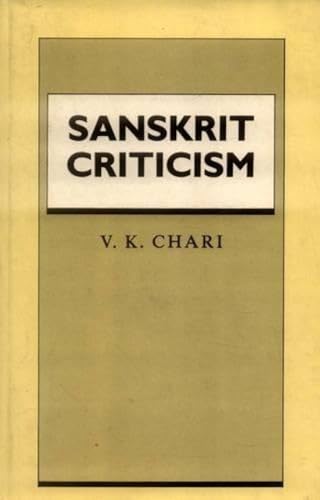
Sanskrit Criticism
Language: English Publication details: Motilal Banarsidass 1993 DelhiDescription: xii, 302pISBN:- 9788120809567 (HB)
 BOOKS
BOOKS
| Home library | Call number | Materials specified | Status | Date due | Barcode | |
|---|---|---|---|---|---|---|
| IMSc Library | 82.9=211 CHA (Browse shelf(Opens below)) | Available | 78373 |
Includes index
Includes bibliography (p. 283-286) and references.
This innovative study develops a unified theory of literature by critically evaluating the categories of sanskrit poetics from a single theoretical standpoint that of rasa the theory that holds that poety is essentially emotive discourse. Literature Chariargues is defined not by the use of any formal linguistic devices but rather by the emotive meaning embodied is therefore the proper aim and the common denominator of all literary works. From this standpoint, poetic statements can be shown to possess a truth value of their own and to convey valid knowledge.
Unlike previous studies addressed primarily to Indologists, Sanskrit Criticism presents traditional thought in a comparative light and, so far as possible, in a modern idiom. Indian concepts of meaning, interpretation, and truth are assimilated into contemporary aesthetic debates in the West in such a way as to make them part of a universal critical discourse. Central to Chari's position is the claim that the validity of these concepts is not limited to Indian literature alone but extends to other literatures as well. Accordingly, most of the literary examples cited are taken from English. Sanskrit Criticism makes a fresh contribution to contemporary criticism and will be stimulating reading not only for comparatists but for anyone interested in the theory of literature. An important feature of this study is that the expositions of the various critical theories are set in their proper context of philosophical ideas.
There are no comments on this title.