
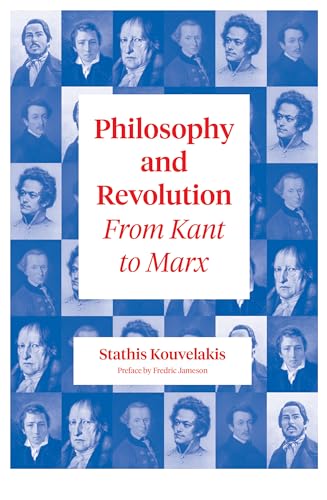
Philosophy and revolution : from Kant to Marx
Material type: TextLanguage: English Publication details: London Verso 2018Description: xiv, 466pISBN:
 - 9781786635785
 BOOKS
BOOKS
| Home library | Call number | Materials specified | Status | Date due | Barcode | |
|---|---|---|---|---|---|---|
| IMSc Library | 82-83 KOU (Browse shelf(Opens below)) | Available | 76148 |
Includes bibliographical references and index
Throughout the nineteenth century, German philosophy was haunted by the specter of the French Revolution. Kant, Hegel and their followers spent their lives wrestling with its heritage, trying to imagine a specifically German path to modernity.
In this ambitious and original study, Stathis Kouvelakis paints a rich panorama of the key intellectual and political figures in the effervescence of German thought before the 1848 revolutions. He shows how the attempt to chart a moderate, reformist path entered into crisis, generating two antagonistic perspectives within the progressive currents of German society. On the one side were those socialists—among them Moses Hess and the young Friedrich Engels—who sought to discover a principle of harmony in social relations, bypassing the question of revolutionary politics. On the other side, the poet Heinrich Heine and the young Karl Marx developed a new perspective, articulating revolutionary rupture, proletarian hegemony and struggle for democracy, thereby redefining the very notion of politics itself.
Translated from the French
There are no comments on this title.